


digiPunchCard
Digital Punch Card
Running a loyalty scheme with paper cards sounds simple until the cards disappear, the stamp pad dries out, or a regular customer forgets which card belongs to which offer. I found digiPunchCard most useful when treated as a small part of a repeatable customer-retention routine rather than as a complete business-management system. It gives a business a digital way to handle punch-card loyalty, but the real benefit depends on how clearly the offer is designed and how consistently staff use it.
This is a free business app from Digital Punch Card, aimed at shops and service providers that want to move away from physical loyalty cards. It is available for Everyone, runs on Android 8.0 or later, and the current version is 3.0.0.71. The app has passed the early experimental stage of a brand-new product, having first appeared on February 16, 2015, but its average score of 3.4 from around 57 ratings suggests that the experience is not equally smooth for every user.
Where a digital punch card fits before the first customer uses it
Before installing it, I would decide what behavior I actually want to encourage. A coffee shop might want customers to return for a drink, while a barber could be trying to reward a series of appointments. Those are different habits, and a digital card only helps when the reward is easy to explain. If the offer is vague, the app will not solve the confusion created at the counter.
My preferred starting point would be one simple promotion with a clearly defined finish. Staff should know what counts as a visit, when a punch is added, and what happens when the card is complete. That preparation matters because the app is most valuable when it removes administrative friction. It is less useful if employees still need to interpret complicated exceptions or search through separate notes.
Paper cards remain attractive for a reason: they require almost no setup and customers immediately understand them. A digital approach becomes worthwhile when lost cards, unreadable stamps, or repeated manual explanations are costing time. The trade-off is that both the business and the customer must accept a phone-based process. A customer who prefers a wallet card may see that as an inconvenience rather than an improvement.
Related News

Why WhatsApp Messenger Still Makes Everyday Communication Feel Easy

Jurassic World: The Game Is the Better Dino Tycoon for Strategic Players

Threads in Real Life: Who Should Join, Lurk, or Leave

How SHEIN Turned Shopping Into an Endless Content Feed

How to Make Fortnite Feel Smarter on Mobile

Should You Switch to Microsoft Outlook on Mobile?
I would also separate loyalty from other business tasks. This is not the tool I would choose as a replacement for accounting, inventory control, appointment scheduling, or a full customer relationship platform. Its natural role is narrower: keeping a punch-based reward process more organized than a stack of cards at the register.
Setting up a useful loyalty habit
The strongest workflow begins with a short staff script. A cashier can ask whether the customer already uses the digital card, explain the reward in one sentence, and complete the punch before moving to the next order. That sequence is more important than adding several promotions at once. Multiple overlapping cards can make the process harder to remember and create awkward disputes about which purchase qualifies.
I would test the routine during a quiet period rather than introducing it during the busiest shift. The goal is to discover where people hesitate: finding the right customer, confirming the purchase, or explaining the reward. Those observations are more useful than simply checking whether the app installed successfully.
Gallery
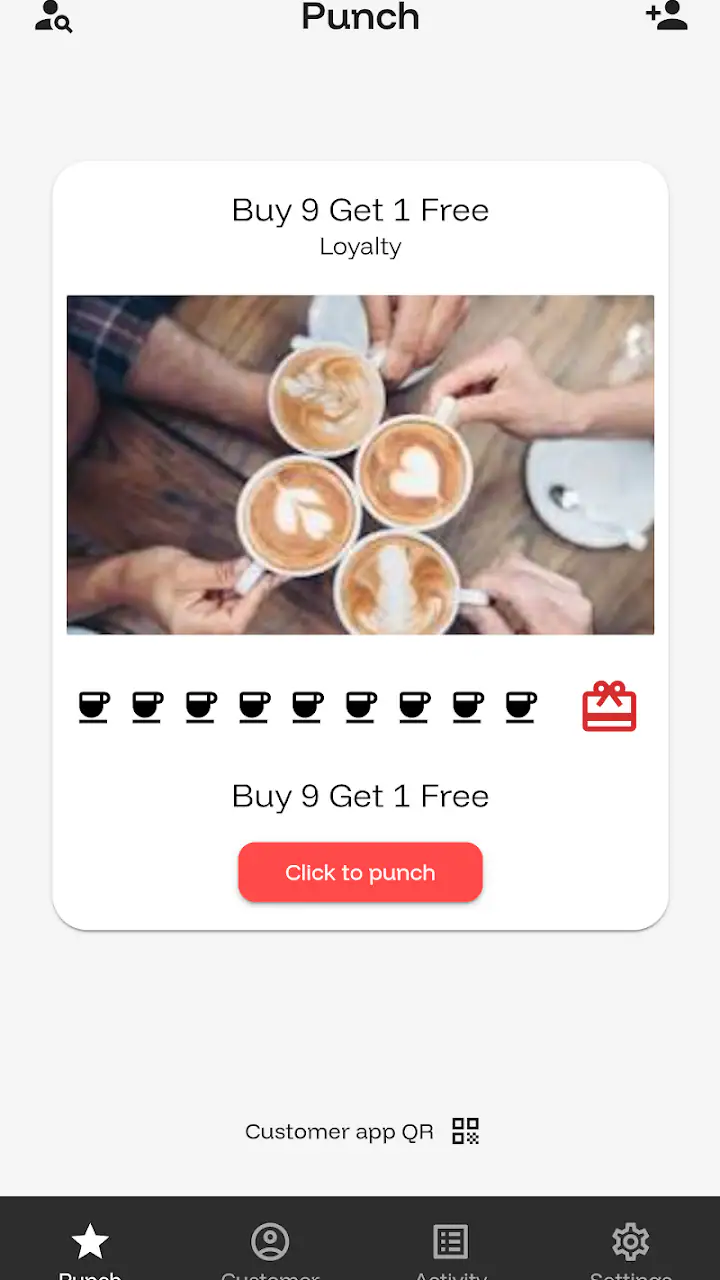
A practical tip is to write the promotion rules in the same everyday language staff use with customers. Avoid relying on a long internal explanation. If the reward cannot be described quickly, the loyalty offer itself probably needs simplifying before it is placed into a digital workflow.
Capturing visits without turning the counter into an office
The appeal of a digital punch card is the possibility of replacing a physical object with a process that stays connected to the customer’s phone. In a small business, that can reduce the number of cards that need to be printed, stored, and replaced. It can also make the loyalty experience feel more current than a paper card tucked behind a bank card.
Still, I would not judge the app only by its first setup screen. The important question is whether the repeated action feels natural during a real transaction. A loyalty system has to survive interruptions, queues, staff changes, and customers who are in a hurry. If adding a punch takes too much attention, employees may skip it, and the business loses the consistency that makes the program worthwhile.
One non-obvious advantage of moving the process onto a phone is that it can make the reward conversation more visible. A customer can see that the visit has been recognized instead of silently handing over a card and hoping the stamp was added. That small moment can reinforce the reason for returning. On the other hand, a phone-based interaction can feel slower when a customer has poor connectivity, a low battery, or does not want to install another app.
I would use the first week as a capture test. Watch whether customers understand what they are receiving, whether staff remember the process without reminders, and whether the reward is motivating enough to justify the extra step. If most people decline, that may say more about the offer or the explanation than about the application itself.
Organizing the process around real customer moments
The best place to use a loyalty app is at a moment that already exists in the business routine. For a café, that might be after payment. For a recurring service, it could be when the appointment is completed. Adding a separate loyalty conversation before the transaction can create a bottleneck, while attaching it to an established step makes adoption easier.
I would also make one person responsible for checking that the process remains understandable. This does not need to be a full-time administrator. It could be the owner or shift manager reviewing the routine occasionally and asking staff where customers get stuck. Without that ownership, even a simple loyalty system can gradually become inconsistent.
There is a useful distinction between capturing a visit and understanding a customer. A punch tells the business that a qualifying interaction happened; it does not automatically explain why the person returned, what they prefer, or whether the reward was profitable. Businesses expecting detailed customer analysis should look at a more comprehensive platform instead of treating this app as a full marketing database.
Building a repeatable routine instead of chasing occasional use
For me, the sustainable way to use digiPunchCard is to make it part of a short daily checklist. At opening, staff can confirm that the loyalty process is ready. During service, they can add the punch at the same point in every transaction. At closing, the manager can note any unusual cases, such as a customer who could not complete the process or a reward that needed clarification.
That routine avoids a common mistake: expecting the technology to create loyalty by itself. Customers return when the underlying product or service is good, the reward feels attainable, and the experience is dependable. The app supports that system by giving the business a digital structure, but it cannot compensate for an unattractive offer or inconsistent service.
A second useful habit is reviewing the promotion before changing it. If the reward is too distant, customers may stop caring before they reach it. If it is too generous, the business may attract visits that do not make financial sense. I would adjust the offer only after observing how customers and staff actually use it, rather than changing the rules every few days.
Because the app is free to download, it is relatively easy for a small business to try without committing to a large software purchase. However, in-app items range from $0.99 to $649.99, so I would review any purchase screen carefully and decide in advance what the business is willing to spend. A free starting point does not mean every optional element has no cost.
This is also where the app should be compared with the usual alternatives. Paper cards are simpler for customers who do not want another digital account, while a point-of-sale loyalty feature may be better when the business needs rewards tied directly to receipts and sales records. A full customer platform is more appropriate for campaigns, segmentation, and detailed follow-up. digiPunchCard makes the most sense in the middle: more organized than paper, but less ambitious than an all-in-one business system.
A realistic day-to-day example
Imagine a small lunch counter with a steady group of repeat customers. Before using a digital system, the owner keeps blank cards beside the register and replaces them when customers lose them. During a busy lunch period, staff sometimes forget to stamp a card or cannot tell whether a faded mark counts. The owner wants repeat visits, but the loyalty process is competing with the queue.
I would introduce one straightforward digital reward and train the team to mention it immediately after the qualifying purchase. A returning customer can then follow the same sequence each time: identify the loyalty card, receive recognition for the visit, and leave knowing how close the reward is. The owner should watch the line rather than assume the change is automatically faster. If it slows service, the process needs simplifying or moving to a quieter point in the interaction.
The deeper lesson is that the app works best when it replaces a specific source of friction. It is not enough to say that digital is modern. The business should be able to name the problem being removed: lost cards, inconsistent punches, or an unclear record of progress. If none of those problems exist, paper may remain the better choice.
Failure points I would plan for before relying on it
The average rating indicates a mixed experience, and I would take that seriously without treating it as a final verdict. A loyalty tool can be perfectly suitable for one small operation and frustrating for another because the surrounding workflow is different. The app’s narrow purpose is a strength when expectations are modest, but it becomes a weakness when the business wants deeper automation.
The first likely failure point is staff consistency. If one employee adds punches immediately and another forgets, customers will notice the difference. A digital card does not remove the need for training. I would keep the procedure short enough that a new staff member can learn it during a normal shift, then observe the process rather than relying only on verbal instructions.
The second is customer adoption. Some people will not want to use a digital loyalty card, and pressuring them can damage the friendly feeling the program is meant to create. Maintaining a polite alternative may be sensible during the transition, although that means the business is managing two systems at once. If the owner cannot support both without confusion, it may be better to choose one approach clearly.
The third is overestimating what a punch record tells you. A customer may complete a card without becoming more profitable, or may return because of excellent service rather than the reward. I would treat the app as an operational aid, not as proof that a promotion is working. The business still needs its own judgment about margins, repeat behavior, and customer feedback.
There is also a practical cost question. The free entry point is appealing for testing, but optional in-app purchases can make the total cost less obvious than a single fixed subscription. Before committing, I would identify which parts are essential to the intended workflow and avoid paying for extras simply because they appear during setup.
Another limitation is scope. If the business needs employee permissions, detailed sales reporting, automated messages, stock links, or appointment records, I would look elsewhere. A dedicated point-of-sale system or customer-management platform will usually be a better foundation for those needs. Choosing this app for a job it was not designed to do is the fastest way to become disappointed.
Questions I would answer before adoption
For a very small shop, the first question is whether the app can be introduced without disrupting service. My answer is yes, but only if the business starts with one offer and one consistent moment for adding a punch. A complicated launch is likely to create more work than the paper cards it replaces.
The next question is whether it suits a business that has several locations or a large team. I would be cautious. The more people and sites involved, the more important centralized controls, reporting, and clear staff permissions become. A lightweight punch-card tool may be better suited to an owner-led operation where the loyalty routine can be observed directly.
Customers may also ask whether they need to pay to try it. The app itself is free, which makes a small pilot practical, but the presence of paid in-app items means I would not approve purchases casually. A pilot should have a defined purpose and a spending limit.
Another concern is device compatibility. Android users need version 8.0 or newer, so older phones may not be suitable. I would check the devices used by staff before announcing the program. Customer adoption can be undermined if the business promotes a process that some people cannot comfortably access.
Finally, I would ask whether the app is better than a paper card for this particular business. Choose it when lost cards and manual tracking are genuine problems, staff can follow a shared routine, and customers are comfortable with the digital format. Choose paper when the audience values simplicity above all else, or choose a fuller business platform when loyalty is only one part of a larger operational system.
Who should adopt it and who should skip it
I would recommend trying this app to an independent café, salon, takeaway, boutique, or other small operation with a straightforward repeat-visit reward. It is especially suitable when the owner wants to test digital loyalty without immediately buying a broad business suite. The free starting point lowers the barrier to experimentation, while the focused purpose keeps the initial workflow understandable.
I would also recommend it to a business that has already identified a paper-card problem. If customers regularly lose cards or staff spend time resolving unclear stamps, a digital alternative has a clear job to perform. In that situation, the app can become one dependable step in a wider productivity system: define the offer, capture the visit, review exceptions, and improve the routine gradually.
I would skip it for a company looking for advanced customer intelligence, integrated sales reporting, or a complete marketing engine. I would also hesitate if the staff rarely use smartphones during work or if the customer base strongly prefers physical cards. Technology should reduce friction, not move the same friction onto a different screen.
My overall view is cautiously positive. The real value is not the digital punch itself, but the repeatable habit built around it. When the offer is simple and the team follows the same process, digiPunchCard can be a practical alternative to paper for a small business. When the business needs broad automation or detailed insight, a more powerful system will be worth the extra complexity.
With an average of 3.4, it is sensible to approach the app as something to test rather than something to install blindly across an entire operation. I would run a limited pilot, watch the customer experience, check the cost of any optional purchases, and keep a clear fallback plan. That approach respects both the app’s useful niche and its limitations.
In the end, I see it as a focused loyalty tool rather than a universal business solution. It can help replace a fragile paper routine, but only when the business supplies the clarity, consistency, and personal service that make customers want to return in the first place.
FAQs for digiPunchCard
What is digiPunchCard and how does it work?
digiPunchCard is a digital loyalty-card app designed to help users collect punches or stamps from participating businesses without carrying a physical card. After opening the app, you typically select or connect to a participating merchant, then scan a code, show your account, or let staff record a visit. Once the required number of punches is reached, the available reward can be redeemed according to that business’s terms.
Do I need an account to use digiPunchCard?
An account may be required for some digiPunchCard features, especially if the app needs to save your loyalty progress, rewards, or participating-business information across devices. Registration commonly involves an email address, phone number, or another sign-in method. Before creating an account, check the app’s privacy information and confirm which personal details are collected and how they are used.
Where can I use digiPunchCard, and does it work with every business?
digiPunchCard is not necessarily accepted by every store, restaurant, or service provider. Its usefulness depends on whether a business has joined the digiPunchCard network and activated a digital loyalty program. Availability can vary by location, so it is best to check the app for nearby participating merchants before downloading or visiting a business. Individual reward rules may also differ.
How do I earn and redeem rewards in digiPunchCard?
Rewards are generally earned by completing qualifying purchases or visits and having a punch added through the participating business. The app should display your current progress and, when applicable, identify the reward you have unlocked. Redemption is controlled by the merchant, so you may need to show the digital card or reward at checkout and follow any expiration, purchase, or product restrictions.
Is digiPunchCard free, and what should I know about privacy or phone compatibility?
For customers, digiPunchCard is generally intended to be free to download and use, although participating businesses determine their own purchase requirements and reward conditions. Compatibility depends on your Android or iOS version and the app’s current release. Because loyalty apps can process account, device, or visit-related information, review the privacy policy, requested permissions, and developer details before installing.
Pros
- Simple way to store and manage digital loyalty cards
- Reduces the need to carry multiple physical punch cards
- Quick access to participating businesses in one app
- Helps prevent lost or damaged loyalty cards
- Useful for tracking visits and potential rewards
Cons
- Benefits depend on local businesses supporting digiPunchCard
- Some features may require creating an account
- Not every loyalty program may be available in your area
- Reward terms can vary between participating businesses
- Limited value if you only visit a few participating stores


